

“China-plus-One” Is Accelerating—But the Alternatives Are Already Full of Speed Bumps
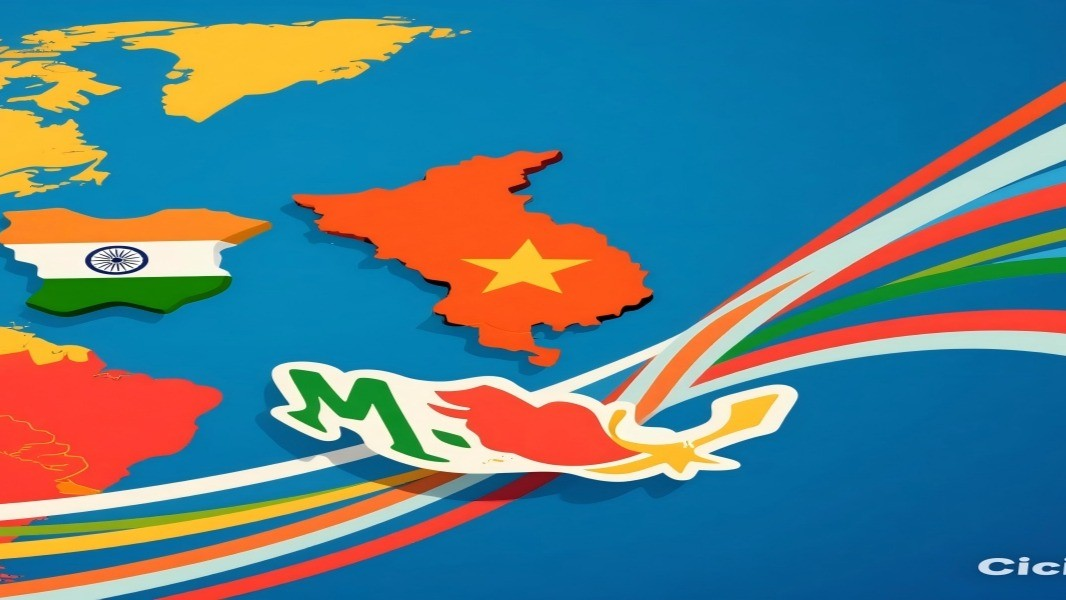
What every European sourcing manager should know before moving the next PO to Vietnam, India, or Mexico
For every €100 that European companies spent on imported manufactured goods last year, €62 still came from China. Yet 9 out of 10 purchasing directors I meet tell me their Board has set a 2026 KPI: cut the “China share” below 50 %. The race is on—but the road is narrower than most people think.
- Why the move is no longer optional
a) Geo-visible risk is now a governance issue
- 2024 BCG survey of 180 listed EU manufacturers: 91 % have written “China-plus-One” into their 2025-26 ESG report; 47 % link the metric to CEO bonus.
b) Carbon money is real money
- EU Carbon Border Adjustment Mechanism (CBAM) enters full force in 2026. A Chinese steel casting currently carries a €76/t embedded-carbon surcharge that a Vietnamese casting does not—yet.
c) Rules of origin can be worth 4-6 % margin overnight
- EU GSP+ gives Indian garments zero duty vs. 12 % for Chinese. On a €4 FOB shirt that is exactly €0.48 of extra gross profit—enough to cover the air-freight upgrade when things go wrong.
2. The “China share” is falling—fast
Chart 1 (suggestion: simple slope graph) US import share change 2022 → 2025 China ‑16 % | Vietnam +38 % | India +28 % | Mexico +52 % Source: US ITC, Jan-Apr 2025 data release
But the absolute numbers still tell the story: China = 35 % of global manufacturing value-added, equal to the US+Germany+Japan combined. No single alternative comes even close.
3. The four bottlenecks no one puts on the first slide
Bottleneck 1 – Labour productivity gap
- Chinese textile worker: 20 sock machines per shift
- Vietnamese worker: 6 machines per shift Result: unit labour cost in Vietnam is 8 % higher once you divide by output (Jasan Group 2024 annual report).
Bottleneck 2 – Policy whiplash
- May 2025: Vietnamese National Assembly cancelled the 10 % CIT holiday for 4 textile parks; Logitech & Luthai were asked to retro-pay 2024 taxes—USD 6-9 m each.
- China’s western provinces keep their 15 % CIT rebate locked until 2030.
Bottleneck 3 – Power reliability
- June 2024: 45 °C heat-wave forced India’s northern grid to cut 18 textile clusters for 11 days; 21 m pairs of Levi’s shorts delayed 3 weeks.
- China’s “dual-control” limits are announced 30 days in advance—predictable enough to pre-book air cargo.
Bottleneck 4 – Mid-stream chokepoints still in China
- 71 % of global disperse dyes, 63 % of furniture-grade coating resins are made in China. When Indonesia’s largest printing park ran short of Chinese pigments last October, 11 European cosmetic-packaging suppliers missed the Christmas shelf window.
4. Speed-bumps in the “new” destinations
Vietnam – Electricity tariff up 15 % in Jan 2025; factories now pay €0.12/kWh, same as Guangdong.
India – Only 17 % of wooden furniture exports are FSC-certified; EU eco-design directive 2027 will require 100 %.
Mexico – Back-haul empty container rate 58 % in Manzanillo; every 40 ft to Europe carries an extra €1,100 repositioning fee.
Bangladesh – Gas pressure so low that denim laundries run at 60 % capacity; MOQ 5,000 pcs but lead-time 90 days.
5. What smart managers do instead of “big-bang” relocation
a) Keep the core, add the edge Move only the labour-intensive last 20 % (sewing, final pack) to Ho Chi Minh City or Jaipur, but keep cutting, dyeing and tooling in Guangdong or Zhejiang. Freight within Asia is <3 days, so you still hit ETD 10 days earlier than a full China exit.
b) Build a twin-plant safety net One EU buyer of LED string lights placed 70 % in China, 30 % in Haiphong. When Vietnam lost power for 36 h last August, Chinese lines absorbed the overflow within 48 h—zero lost sales.
c) Turn CBAM into a selling point Use Chinese suppliers who already file ISO 14064 + third-party LCAs. You neutralise the €76/t carbon surcharge and can prove to the board that “China is still the lowest true cost.”
Take-away
“China-plus-One” is not a myth, but it is not a menu of equal choices either. The alternatives are growing fast because they must, not because they are ready. European sourcing teams that win the next cycle will be those who relocate risk, not just orders—and who remember that capacity without reliability is just a cheaper way to miss the delivery window.

 Deutsch
  Espanol
  Francais
  Italiano
  Portugues
  Japanese
  Korean
  Arabic
  Russian

